
Germany has built a global reputation for engineering excellence. From automotive manufacturing and industrial automation to renewable energy, construction, software, robotics, and advanced manufacturing, engineering remains at the heart of the German economy. For international engineers, this makes Germany an attractive destination for building a long-term career. However, securing a German job from outside Europe is not always easy. Many professionals struggle to attend interviews, connect with employers, understand the local job market, or demonstrate their qualifications while living abroad. The Germany Opportunity Card for engineers, officially known as the Chancenkarte, offers an alternative pathway for eligible non-EU professionals who want to enter Germany and search for suitable employment.
The Opportunity Card is particularly relevant for engineers because Germany has a strong demand for qualified professionals across multiple technical fields. Mechanical engineers, electrical engineers, civil engineers, software engineers, industrial engineers, environmental engineers, and specialists in automation and energy can all explore potential opportunities depending on their qualifications and experience. For international professionals considering Germany, understanding the Opportunity Card, eligibility requirements, qualification recognition, language expectations, and job-search strategy is essential. This guide explains what engineers should know before pursuing this pathway.
Understanding the Germany Opportunity Card
The Germany Opportunity Card is a residence pathway that allows eligible professionals from countries outside the European Union to enter Germany to look for employment. Unlike traditional employment-based immigration routes, an applicant does not necessarily need to have a German job offer before entering the country. This can be a significant advantage for engineers who have strong qualifications but have found it difficult to secure employment while applying from overseas.
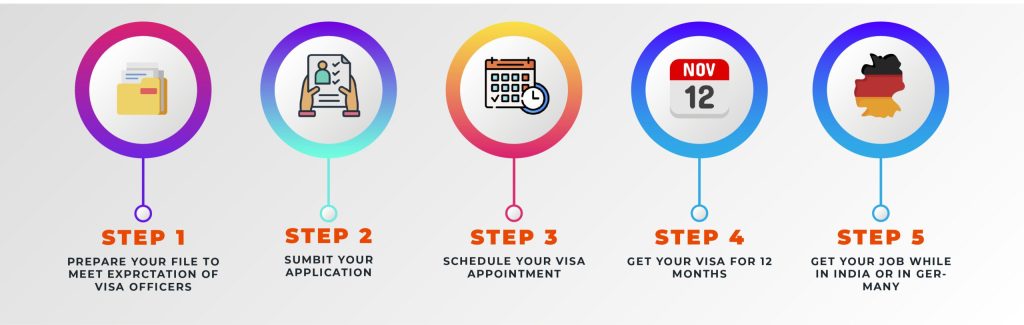
The Opportunity Card generally allows eligible applicants to stay in Germany for up to 12 months while searching for suitable employment. During this period, holders can pursue job opportunities and, under the applicable rules, undertake limited part-time employment. Once a suitable qualified position is secured, the applicant may be able to transition to an appropriate residence permit based on their employment and qualifications. The German government provides two main ways for professionals to qualify:
- Through a fully recognized foreign qualification
- Through a points-based system
Which route applies depends on an individual’s educational qualifications, professional background, recognition status, language skills, age, and other factors.
Why Germany Is a Strong Destination for Engineers
Germany’s engineering sector is closely connected to some of the country’s most important industries. The country is internationally recognized for automotive engineering, machinery, manufacturing, industrial technology, infrastructure, energy, electronics, and research. This broad industrial ecosystem creates opportunities for engineers with different specializations and levels of experience. International engineers may find opportunities in areas such as:
- Maschinenbau
- Automotive engineering
- Elektrotechnik
- Bauingenieurwesen
- Structural engineering
- Industrial engineering
- Mechatronics
- Automation
- Robotics
- Software engineering
- Embedded systems
- Erneuerbare Energien
- Umweltingenieurwesen
- Manufacturing
- Production engineering
- Engineering consulting
- Infrastructure development
Germany’s engineering employers also increasingly value professionals who can combine technical expertise with digital skills, project management, communication, and international experience. For this reason, the Opportunity Card can be particularly useful for engineers who want to enter the German market and explore opportunities directly rather than relying entirely on applications submitted from their home country.
Who Can Apply for the Germany Opportunity Card?
The eligibility requirements depend on the route an applicant uses.
Route One: Recognized Qualification
Engineers who have a foreign academic or vocational qualification that is fully recognized in Germany may qualify through the skilled-worker route. This route can be simpler because applicants who meet the relevant requirements do not have to rely on the points system. For an engineer, qualification recognition or comparability can therefore be an important part of the preparation process. If your engineering degree has already been recognized or meets the applicable German requirements, you should keep the relevant documentation ready for the visa and employment process.
Route Two: Points-Based System
Engineers whose qualifications are not fully recognized may still be eligible through the Opportunity Card points system. Under this route, applicants generally need a recognized foreign qualification, appropriate language skills, sufficient financial resources, and at least six points under the applicable criteria. Points may be awarded for factors such as:
- Professional qualifications
- Partial recognition of qualifications
- Professional experience
- German language skills
- English language skills
- Age
- Qualifications in shortage occupations
- Other qualifying circumstances
The exact scoring rules and requirements should always be checked against the latest official German immigration guidance before applying.
How the Opportunity Card Points System Can Benefit Engineers
The points system is particularly relevant to engineers because professional experience and technical qualifications can contribute significantly to an applicant’s overall profile. For example, an engineer with a relevant university degree, several years of professional experience, strong English skills, basic German, and a specialization aligned with areas of demand may have multiple factors working in their favor.
Applicants should not simply estimate their eligibility informally. Every point claimed needs to be supported by appropriate documentation. This means engineers should organize degree certificates, professional experience letters, language certificates, recognition documents, and other relevant evidence before beginning the application process.
Is German Language Required for Engineers?
Language requirements depend on the applicant’s qualification route. For the points-based route, applicants generally need at least German A1 or English B2, according to the applicable Opportunity Card requirements. Engineers applying through a fully recognized qualification route may not need to provide German-language proof specifically for the Opportunity Card. However, language ability can still have a major impact on employment prospects.
This is especially important for engineers working in industries where communication with German-speaking colleagues, suppliers, customers, contractors, or government authorities is part of the role. English can be sufficient for some international companies and technology positions, particularly in software and certain research environments. Nevertheless, German can significantly expand the number of potential employers and make everyday professional communication easier. Engineers should therefore consider language learning as an investment in their career rather than merely a visa requirement.
Qualification Recognition: A Critical Step
One of the most important areas international engineers should investigate is the status of their foreign qualification. Germany has specific procedures for evaluating international academic and professional qualifications. Depending on the profession and immigration pathway, formal recognition may or may not be mandatory.
For academic degrees, applicants may need to establish whether their university and qualification are listed appropriately in the Anabin database or whether they need a Statement of Comparability. Qualification recognition can help employers understand how an international degree compares with German educational standards. Engineers should begin this process early because missing or incomplete qualification documentation can create unnecessary delays. A professional should never assume that having an engineering degree automatically means every German employer or authority will treat the qualification in exactly the same way.
Engineering Fields With Potential Opportunities in Germany
The German engineering market is diverse, so international professionals should target positions according to their specialization rather than applying randomly.
Maschinenbau
Mechanical engineering remains closely connected to Germany’s manufacturing and industrial sectors.
Professionals can explore opportunities in product development, machinery, automotive manufacturing, production technology, industrial equipment, CAD design, simulation, and maintenance.
Experience with engineering software, manufacturing systems, quality management, and industrial automation can strengthen a mechanical engineer’s profile.
Electrical and Electronics Engineering
Electrical engineers can explore sectors including automation, power systems, electronics, industrial controls, energy, manufacturing, and electrical infrastructure. Knowledge of PLC systems, control technology, electrical design, industrial automation, and modern energy systems may be valuable depending on the position.
Bauingenieurwesen
Civil engineers can pursue opportunities associated with construction, infrastructure, structural engineering, transportation, urban development, and project management.
International civil engineers should also familiarize themselves with German construction practices, regulations, standards, and technical documentation.
Software and Technology Engineering
Germany’s technology ecosystem provides opportunities for software engineers and technical professionals working with modern digital systems.
Potential areas include:
- Software development
- Cloud computing
- Artificial intelligence
- Data engineering
- Cybersecurity
- Embedded systems
- Automation software
- Industrial software
- Internet of Things
A strong portfolio and demonstrable project experience can be particularly helpful for technology-focused professionals.
Industrial and Production Engineering
Industrial engineers can target manufacturing, production optimization, logistics, quality management, supply-chain operations, and process improvement.
Experience with Lean Manufacturing, Six Sigma, ERP systems, data analytics, and process optimization can help distinguish candidates in competitive recruitment processes.
What Documents Should Engineers Prepare?
Preparation is one of the most important parts of the Opportunity Card process.
Although exact requirements can vary according to the applicant and responsible German mission, engineers should generally be prepared to provide documentation such as:
- Valid passport
- Engineering degree
- Academic transcripts
- Qualification recognition or comparability documents
- Professional experience certificates
- Updated CV
- Language certificate where required
- Proof of financial resources
- Health insurance documentation
- Passport photographs
- Visa/application forms
- Evidence supporting points claimed
- Other documents requested by the relevant German authorities
Documents issued in languages other than those accepted by the relevant authority may require translation.
Applicants should always check the latest requirements of the German embassy, consulate, or official immigration portal relevant to their place of application.
Financial Requirements for the Opportunity Card
Engineers applying for the Opportunity Card must demonstrate that they can support themselves during their stay in Germany.
The German government currently specifies a minimum monthly financial requirement for applicants. For 2026, the amount listed by the official Make it in Germany portal is €1,091 net per month.
Financial proof may generally be demonstrated through mechanisms such as a blocked account or, where applicable, another accepted form of financial guarantee.
This requirement is important because the Opportunity Card is designed for people who are entering Germany to search for employment rather than immediately beginning a full-time job.
Applicants should therefore prepare their finances carefully before travelling.
How Engineers Should Prepare Before Traveling
Getting the visa is only one part of the process. The real objective is finding suitable employment. Engineers should ideally begin their job-search preparation before entering Germany. Start by researching:
- German engineering companies
- Cities with relevant industries
- Job titles used for your specialization
- Salary expectations
- Required technical skills
- German language requirements
- Professional certifications
- Industry-specific standards
- Employers hiring international professionals
Understanding the terminology used in German job advertisements can make applications significantly more effective. For example, an engineer may have a particular job title in their home country that differs from the title commonly used by German employers. Identifying the correct German-market terminology can help candidates find more relevant vacancies.
Build a Professional CV for the German Market
Your CV is one of the most important tools in the job search. Instead of simply listing responsibilities, engineers should emphasize measurable achievements. For example, rather than writing that you “worked on manufacturing projects,” explain what you accomplished, such as improving production efficiency, reducing downtime, managing a particular project, or implementing a technical solution. Your CV should clearly communicate:
- Engineering specialization
- Educational qualifications
- Professional experience
- Technical competencies
- Engineering software
- Certifications
- Major projects
- Industry knowledge
- Language skills
- Professional achievements
Engineers working in technical design, software, architecture-related engineering, manufacturing, or other project-based fields can also benefit from maintaining a professional portfolio.
Networking Can Make a Major Difference
One of the advantages of being physically present in Germany is the opportunity to build professional connections.
International engineers should consider attending:
- Industry conferences
- Engineering events
- Career fairs
- Professional networking events
- University career events
- Technology meetups
- Industry exhibitions
Networking can expose candidates to opportunities that may never appear on conventional job boards. LinkedIn can also be valuable. Engineers should maintain an updated profile that clearly communicates their specialization, experience, technical skills, projects, and availability.
Germany Opportunity Card vs. EU Blue Card
The Opportunity Card and EU Blue Card are designed for different situations. The Opportunity Card is primarily intended for eligible individuals who want to enter Germany and search for employment.
The EU Blue Card is generally associated with an eligible employment offer and applicable salary requirements. Therefore, an engineer who already has a qualifying job offer may have a more direct employment-based immigration route. An engineer without an offer may consider whether the Opportunity Card provides an appropriate way to enter Germany and conduct a job search.
These pathways should not be viewed as competing visas. Instead, they can serve different stages of an international professional’s career journey.
Common Mistakes Engineers Should Avoid
Many international applicants make avoidable mistakes during their relocation and job-search process.
Not Checking Qualification Requirements
Do not wait until the last minute to investigate recognition or comparability of your degree.
Treating the Opportunity Card as a Job Guarantee
The Opportunity Card provides a pathway to search for employment. It does not guarantee that an employer will hire you.
Ignoring German Language Learning
Even when German is not mandatory for a particular position, it can increase your employment options and help with professional integration.
Applying With a Generic CV
A CV designed for your home country’s job market may not communicate your strengths effectively to German employers.
Failing to Research the Market
Engineers should know which German cities and industries are most relevant to their specialization before arriving.
Not Preparing Financially
The job search can take time. Applicants should budget carefully for accommodation, transportation, insurance, food, and other expenses.
A Step-by-Step Strategy for International Engineers
A practical approach can make the process much more manageable.
First, evaluate your engineering profile. Identify your specialization, degree, professional experience, certifications, and technical skills.
Next, investigate qualification recognition. Determine whether your degree is recognized, comparable, or requires additional documentation.
Then, determine your Opportunity Card eligibility. If you are applying through the points route, carefully assess whether you can reach the required six points.
Prepare your language documentation. Obtain the required certificate and continue improving your German.
Organize your finances. Make sure you can demonstrate the required financial resources.
Prepare your professional documents. Develop a strong CV, LinkedIn profile, portfolio, and customized application materials.
Research employers. Build a list of companies that hire professionals in your engineering field.
Begin applying before and during your stay. Use company websites, professional networks, recruitment platforms, and industry connections.
Build relationships. Networking can help you understand the market and discover opportunities.
Transition to the appropriate employment residence status after securing a qualifying position. Your next immigration step will depend on your employment, qualifications, salary, and individual circumstances.
How Engineering Maps Helps Engineers Explore Global Opportunities
Planning an engineering career abroad requires reliable information and a clear understanding of the professional landscape. Engineering Maps is designed to provide useful engineering-focused information for professionals researching industries, careers, technical opportunities, and international engineering markets.
For engineers considering Germany, resources that explain industry trends, professional opportunities, engineering disciplines, and career pathways can help turn an unfamiliar market into a more understandable one. Whether you are an experienced professional looking for your next international opportunity or a recently qualified engineer exploring global career options, informed preparation can give you a stronger starting point.
Final Thoughts
The Germany Opportunity Card for engineers can provide an important pathway for qualified international professionals who want to explore employment opportunities in Germany. For engineers, the country’s strong industrial base, technological development, infrastructure projects, manufacturing sector, energy transition, and digital transformation create a wide range of potential career paths.
However, obtaining the Opportunity Card should be viewed as the beginning of the journey not the final goal. Successful relocation requires careful preparation. Engineers should evaluate their qualifications, understand recognition requirements, meet the applicable language and financial conditions, prepare professional documents, research employers, and develop a focused job-search strategy. Most importantly, candidates should keep themselves informed because immigration rules, financial requirements, and employment regulations can change.
With the right preparation, professional qualifications, technical expertise, and a targeted approach to the German job market, the Opportunity Card can become a valuable stepping stone toward an international engineering career. For engineers researching Germany and other global professional opportunities, Engineering Maps can be a useful source of engineering-focused information to support better career research and informed decision-making.