
When considering the global landscape of modern manufacturing, few nations possess comparable technical authority and market presence to Germany. Known for its precision engineering, strong automotive sector, and stringent quality standards, Germany has organically evolved into Europe’s central hub for additive manufacturing (AM). For industry professionals, procurement teams, and technology innovators, understanding the geographic distribution of this growth is crucial. Mapping the physical footprint of the German AM ecosystem reveals a strategic convergence of regional specialization, world-class academic research, and deeply rooted industrial expertise.
At Engineering Maps, we specialize in deciphering complex engineering geographies and mapping the industrial clusters that are shaping the future of manufacturing. In this comprehensive guide, we examine Germany’s leading centers for additive manufacturing and analyze the regional ecosystems driving the 3D printing revolution.
The big picture: Why Germany is a leader in AM in Europe
Before evaluating individual regional clusters, it is important to put the scale of the German AM market into perspective. Germany is a leader in Europe in the adoption of industrial 3D printing and accounts for a significant share of the European market volume as well as patent applications. Driven by the national Industry 4.0 initiative, the digitalization of factory floors, and stringent sustainability requirements, German industries no longer view additive manufacturing merely as a prototyping tool, but as a central pillar of series production.
Whether it’s the production of lightweight aerospace components, conformal cooling channels for complex injection molds, customized medical implants or delicate semiconductor hardware: The German industrial ecosystem has integrated additive technologies across the board.
Bavaria (Munich & Nuremberg): The powerhouse for systems engineering and precision
If Germany is the engine room of the European AM industry, then Bavaria acts as its high-performance gearbox. Munich and Nuremberg are home to an exceptional concentration of world-class research institutes, multinational engineering companies, and pioneering manufacturers of AM hardware.
The main focus areas:
-
The academic anchor: The Technical University of Munich (TUM) continuously drives forward-looking innovations, brings forth deep-tech start-ups and supplies the regional talent pipeline with excellent materials scientists and mechanical engineers.
-
Industry leader and applied research: Bavaria is home to major industrial players as well as advanced research initiatives such as the Fraunhofer IGCV (Research Institute for Casting, Composite and Processing Technology), supported by a dense Tier 1 supplier network in the field of powder bed fusion.
-
Vertical integration: Based on close links to the aerospace industry, automotive giants like BMW, and medical technology, regional AM centers are characterized by highly regulated, certified production environments where traceability and material integrity are essential.
Baden-Württemberg (Stuttgart & Karlsruhe): The traditional engineering heartland
Baden-Württemberg is recognized worldwide as the cradle of modern automotive engineering and a stronghold of mechanical excellence. Logically, this strong industrial foundation has translated into a thriving ecosystem for additive manufacturing.
The main focus areas:
-
Automotive and toolmaking synergy: Cities like Stuttgart and Karlsruhe form the epicenter of automotive innovation. Local engineering firms use metal 3D printing to produce lightweight structural supports, highly efficient heat exchangers, and rapid tooling inserts, significantly reducing time-to-market.
-
The SLM and laser ecosystem: The region has a robust infrastructure for laser-based manufacturing technologies and is home to prominent plant manufacturers, developers of laser beam sources, and post-processing specialists.
-
Practical R&D transfer: Institutions in Baden-Württemberg maintain close cooperation with manufacturing SMEs, which means that breakthroughs in materials science – such as high-entropy alloys and advanced polymers – quickly find their way into the factory floor.
Berlin & Brandenburg: The capital for AM software, start-ups and large format printing
While southern Germany dominates traditional mechanical integration, Berlin and the surrounding region of Brandenburg represent the dynamic, software-driven and entrepreneurial spearhead of the German AM landscape.
The main focus areas:
-
A vibrant start-up hub: Berlin has solidified its status as one of Europe’s leading innovation metropolises, attracting international talent specializing in computer-aided design, workflow automation, and specialized AM software solutions (including advanced slicing and topology optimization platforms).
-
Large-format 3D printing: The capital region is known for pioneering industrial large-format 3D printing; companies like BigRep are commercializing large-format polymer printing directly from local technology districts.
-
Collaborative ecosystems: Organizations such as the Industrial Additive Manufacturing Hub Berlin (IAM Hub) and cross-industry networks such as Mobility goes Additive (MGA) promote collaborative testbeds, demonstration centers and regulatory frameworks.
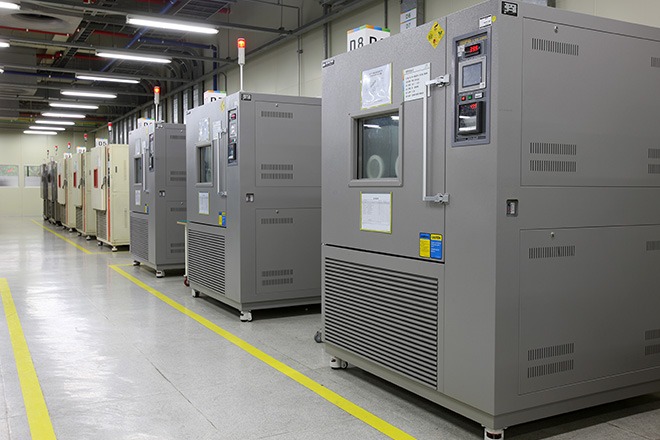
Frankfurt & the Rhine-Main metropolitan region: The epicenter for metal additive manufacturing and logistics
Although Frankfurt is primarily known internationally as a financial metropolis, Frankfurt and its industrial belt play a critical role in the advanced manufacturing supply chain – particularly in the field of additive metal manufacturing.
The main focus areas:
-
Strategic logistics infrastructure: Thanks to first-class transport connections, Frankfurt offers multimodal access to European and global markets, making it a preferred location for B2B procurement teams sourcing industrial 3D printing components.
-
Specialization in metal AM: The Rhine-Main region is home to important players for industrial metal 3D printing systems, the handling of reactive powders, and specialized metallurgical testing facilities.
-
Diverse end applications: Regional demand is strongly driven by high-performance aerospace components, industrial turbine blades, precision medical prostheses, and advanced automotive prototype construction.
North Rhine-Westphalia (NRW): The industrial heavyweight
As Germany’s most populous federal state and historical industrial, steel and energy backbone, North Rhine-Westphalia (including industrial powerhouses such as Aachen, Dortmund and Düsseldorf) is systematically transforming its industrial DNA through additive integration.
The main focus areas:
-
Aachen’s research cluster: Aachen enjoys a worldwide reputation in production engineering research. Supported by RWTH Aachen University and associated institutes, this sub-region stands as a global beacon for laser technology and digitized additive manufacturing lines.
-
Decarbonization and heavy industry: Traditional industries throughout North Rhine-Westphalia are using additive manufacturing for sustainable retrofitting, the replacement of cast components, and decentralized spare parts production, which directly contributes to reducing supply chain emissions.
Navigation on the map: Key trends shaping German AM centers
The analysis of these geographical clusters highlights several overarching technological trends that define the expansion of the German AM market:
-
The rise of metal AM in precision electronics and semiconductors: Beyond automotive and aerospace, additive metal manufacturing is increasingly overlapping with the semiconductor industry, supplying complex thermal management components, custom heat sinks, and high-frequency (HF) hardware.
-
Hybrid manufacturing: Engineering firms are going beyond the pure AM process by integrating additive manufacturing heads directly into multi-axis CNC milling centers. This combines design freedom with the surface precision of subtractive machining.
-
Sustainability and circular economy: Driven by strict European environmental regulations and national climate neutrality targets, regional centers prioritize material recyclability, closed metal powder cycles and energy-efficient plant architectures.
Paving the way with engineering maps
Germany’s additive manufacturing landscape is a sophisticated, highly specialized mosaic of regional excellence. From Bavaria’s systems engineering giants and Baden-Württemberg’s automotive toolmakers to Berlin’s software innovators and Frankfurt’s metal AM logistics corridors, each hub offers distinct strategic advantages. Navigating this complex network requires precise geographic and technical intelligence. At Engineering Maps , we continuously monitor these industrial shifts, connecting engineers, manufacturers, and decision-makers with the spatial insights needed for a lasting competitive edge. Whether you’re seeking high-performance metal printing services, partnering with a leading R&D cluster, or planning your next industrial expansion, understanding Germany’s regional AM hubs is your fundamental step toward shaping the future of engineering.